Discreta Ficción (Discrete Fiction)
Carlos Lara
July 11 – September 27
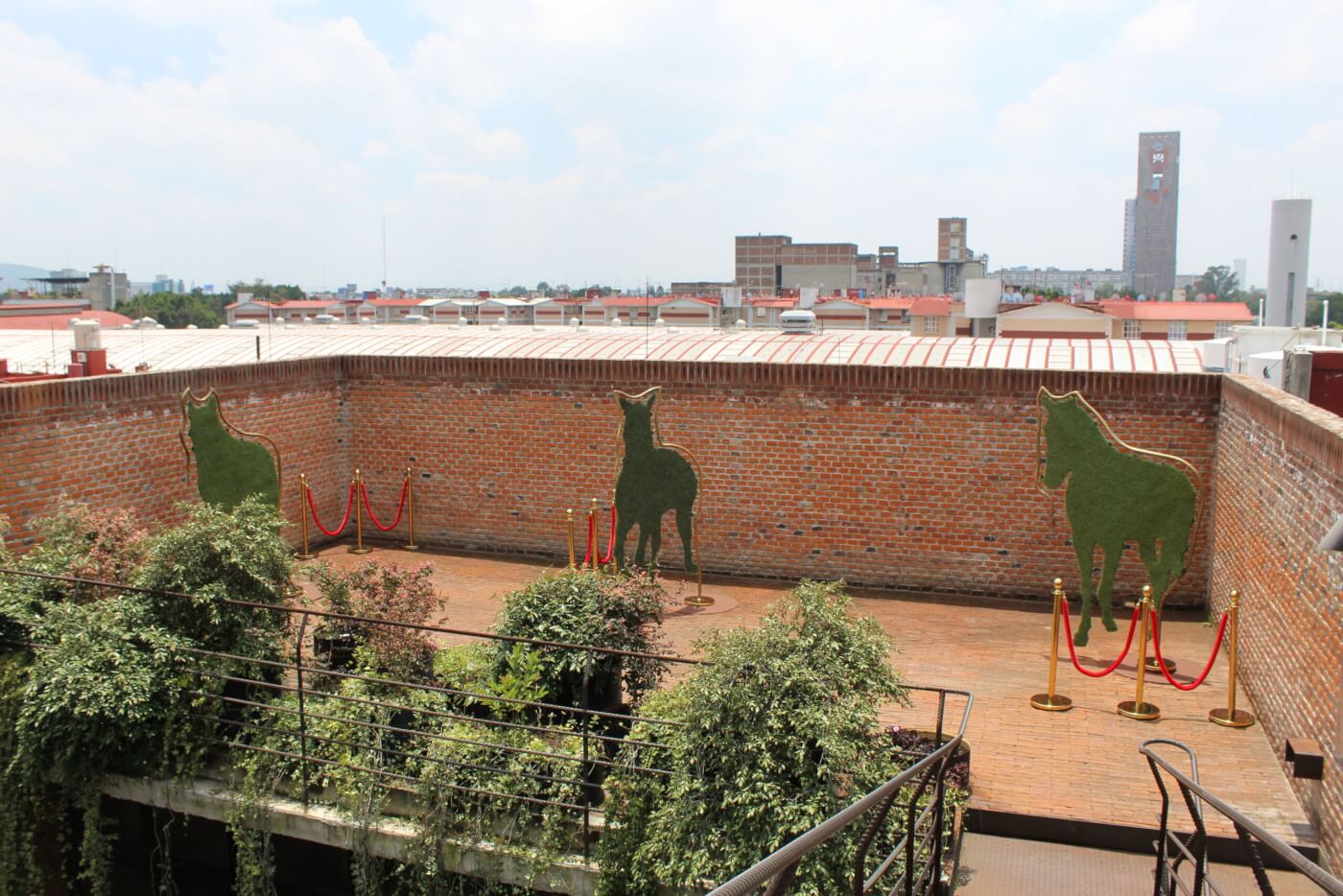
In Discreta Ficción, Carlos Lara takes as his starting point The President of the Republic Riding on Horseback in Chapultepec’s Park (1896), considered the first film shot in Mexico. Starting from this image, the artist develops a series of sculptural exercises involving extraction, translation, and displacement, enabling him to reflect on how certain images and technologies contributed to constructing notions of modernity, nation, nature, and power.
That portrayal was not innocent. At the helm of a government that was beginning to show signs of wear and tear, Díaz found in the Lumière brothers’ new technology a means of disseminating a carefully constructed image of himself. The equestrian portrait—a continuation of a pictorial tradition of representing power that links authority and elegance, culture and nature—projected the image of a vigorous leader, capable of embodying the ideals of modernity and progress that the regime sought to convey. Nearly two decades later, Pancho Villa would sign a contract with the Mutual Film Corporation to construct a completely different public image. In contrast to the solemnity of the Porfirian portrait, Villa used the narrative’s potential of film to construct an active, heroic, and violent character, anticipating the forms of representation that Hollywood would later consolidate.
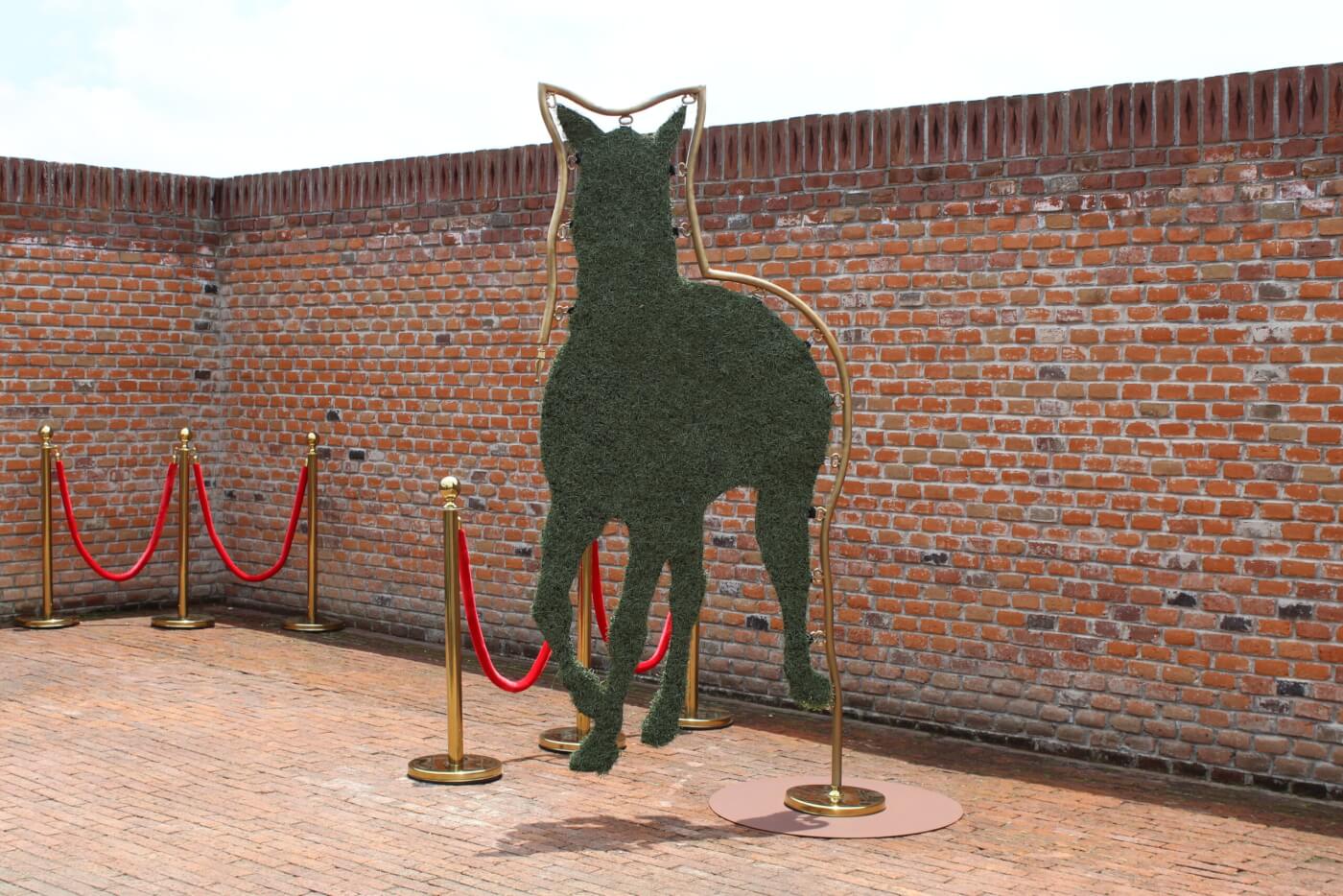
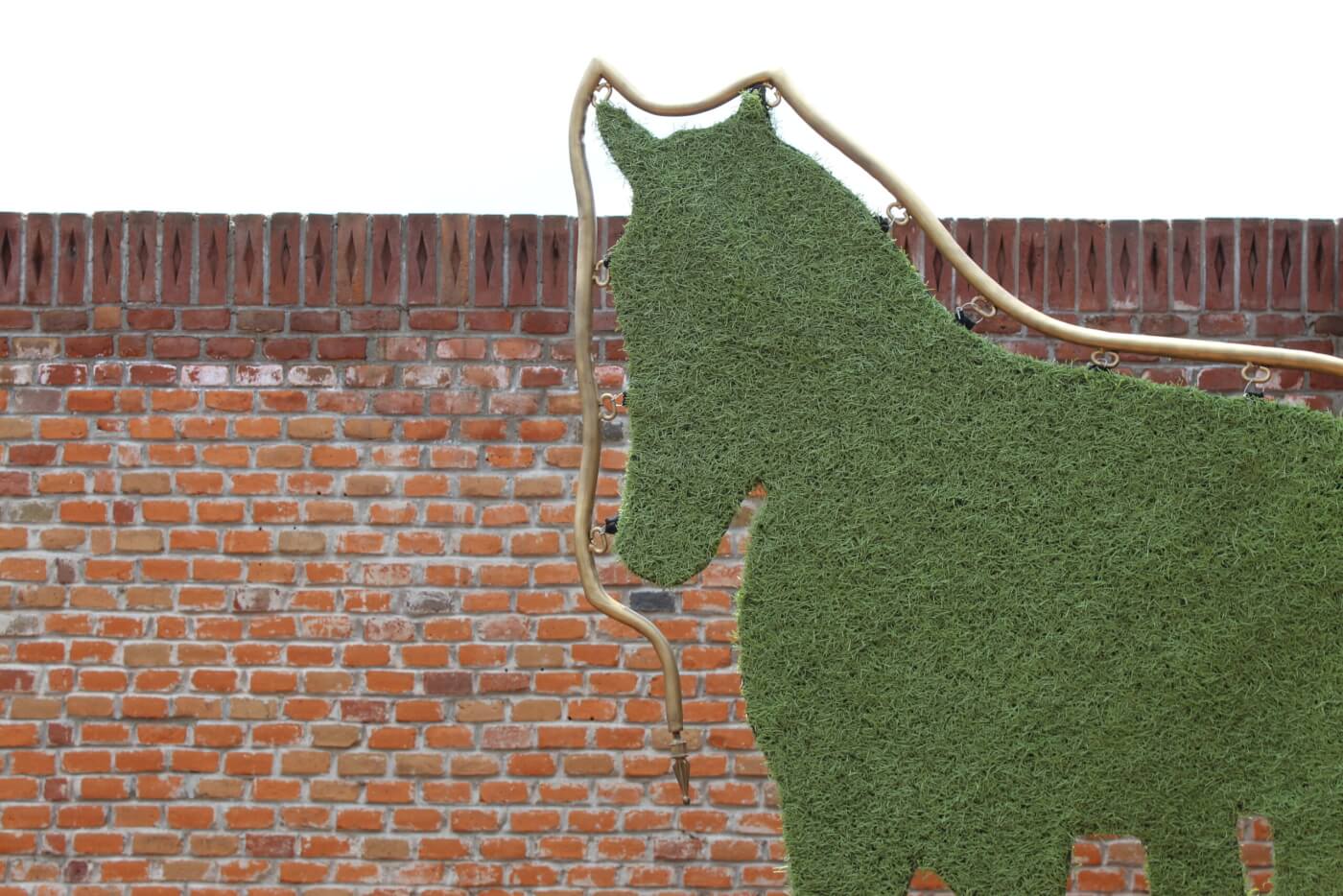
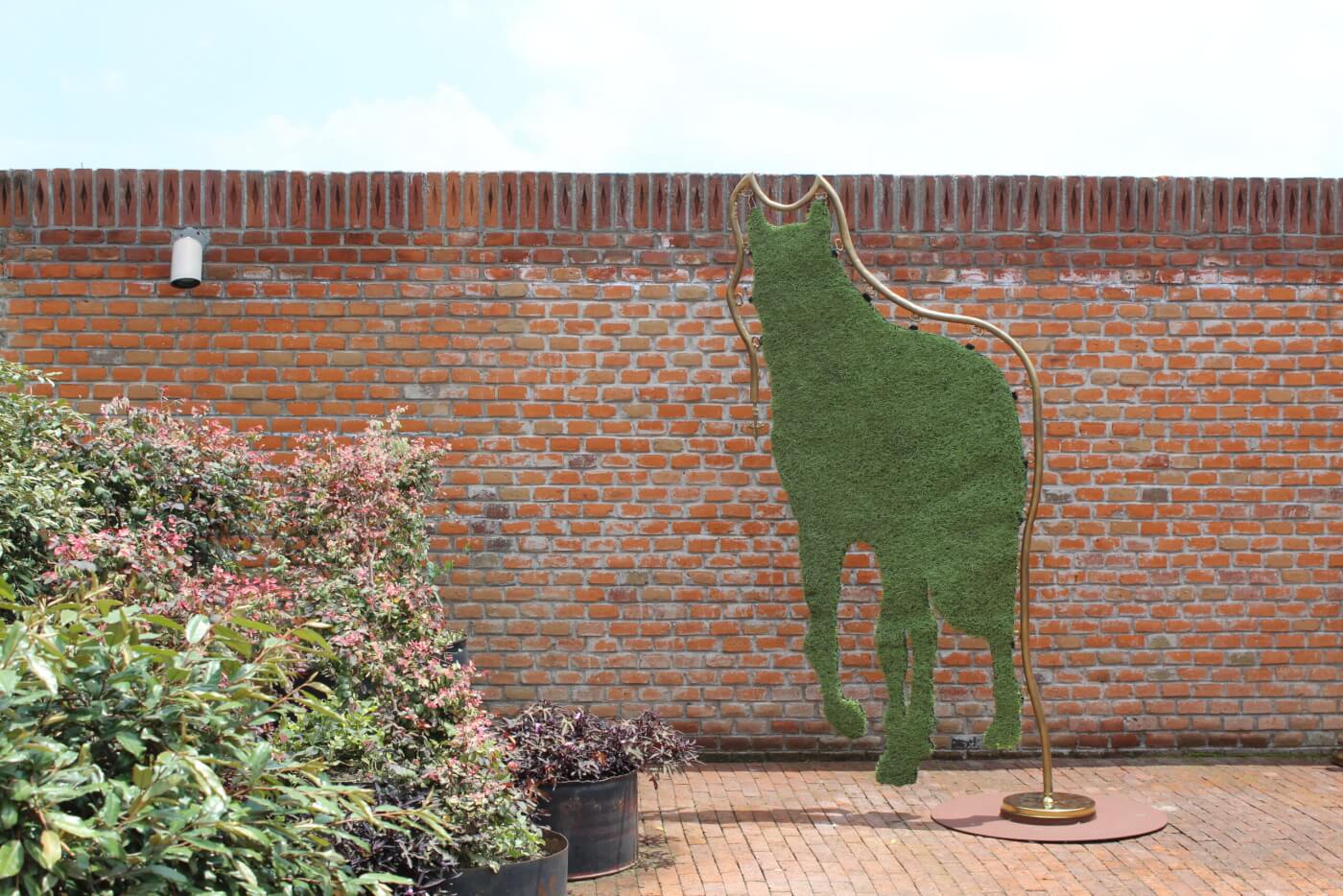
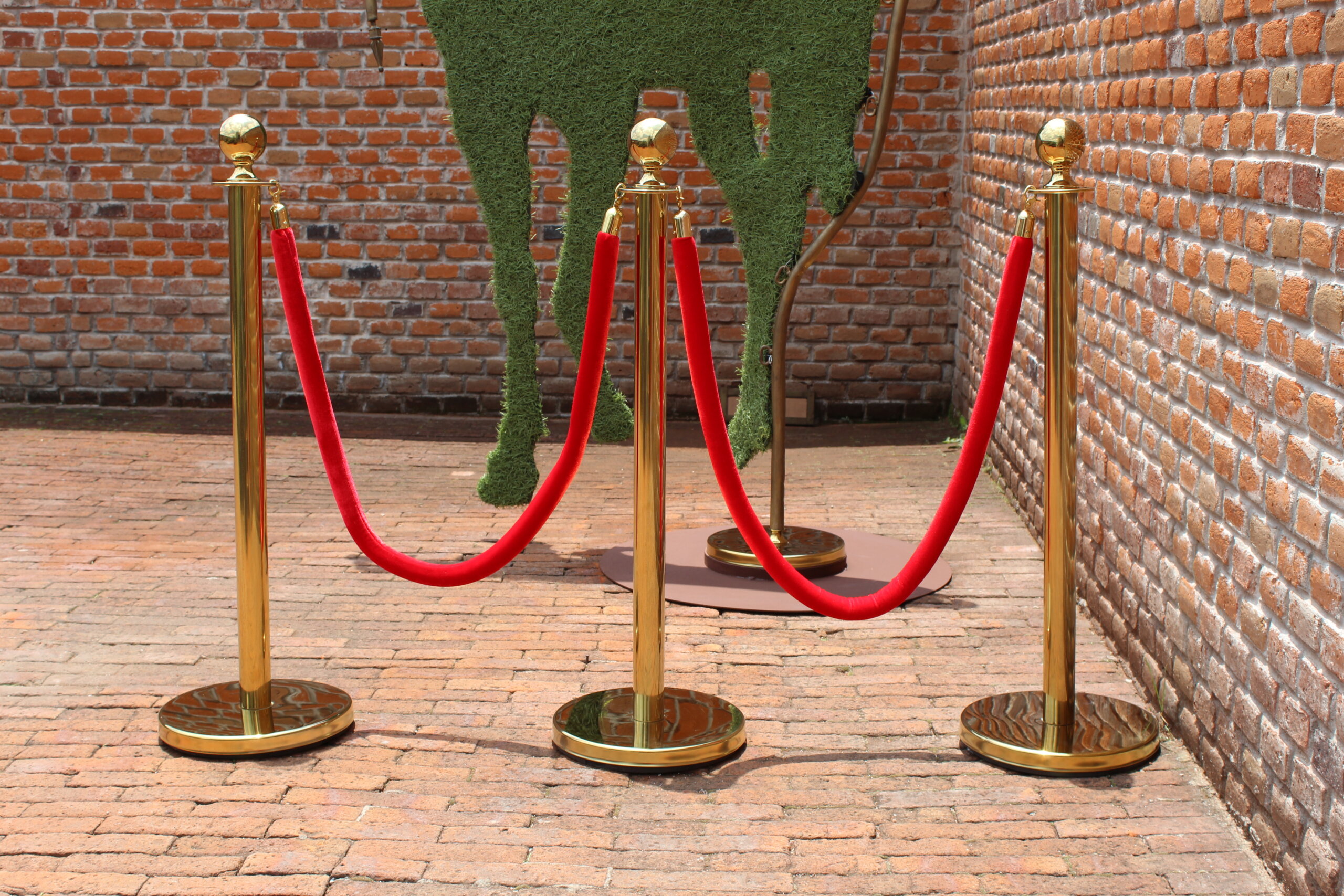
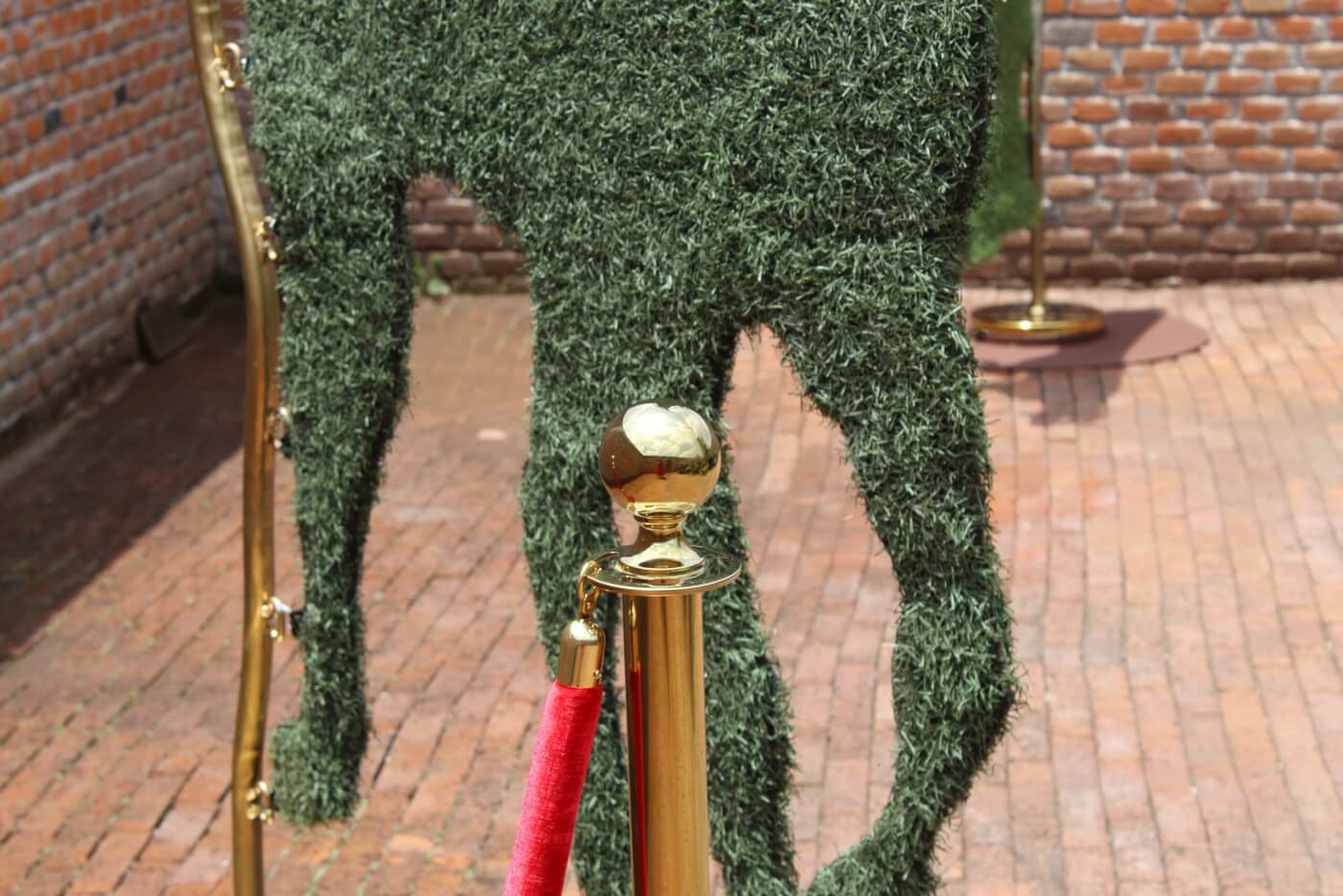
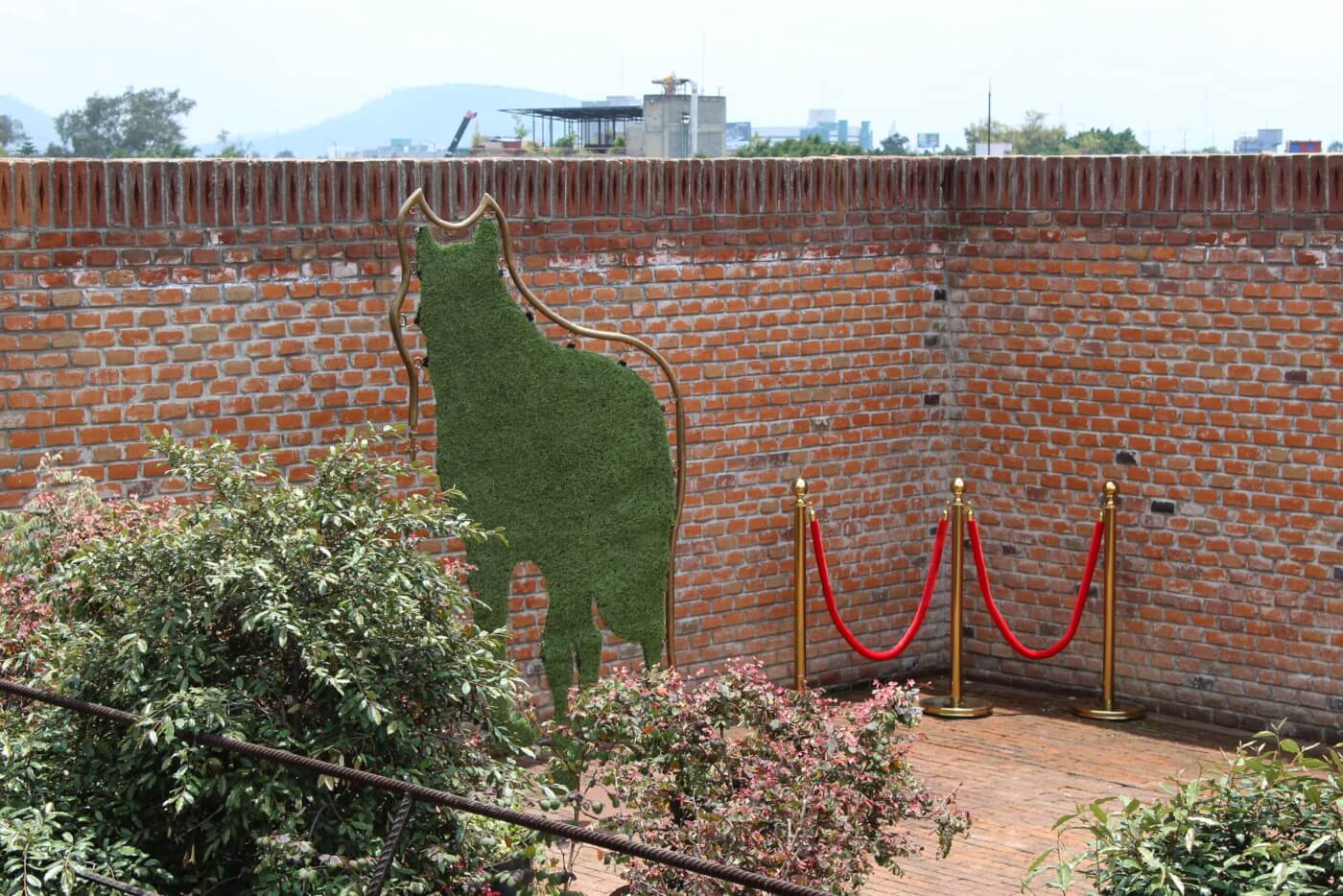
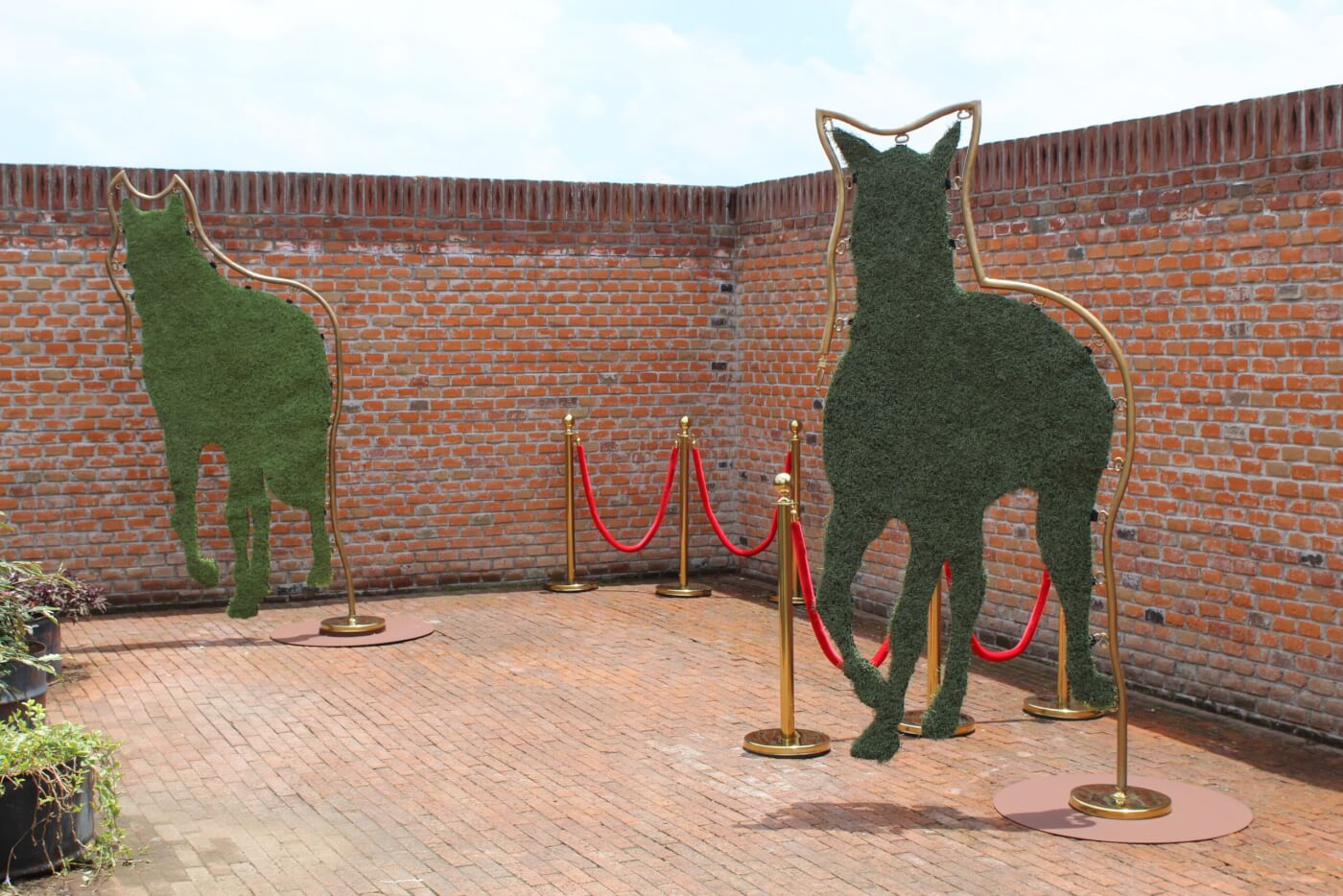
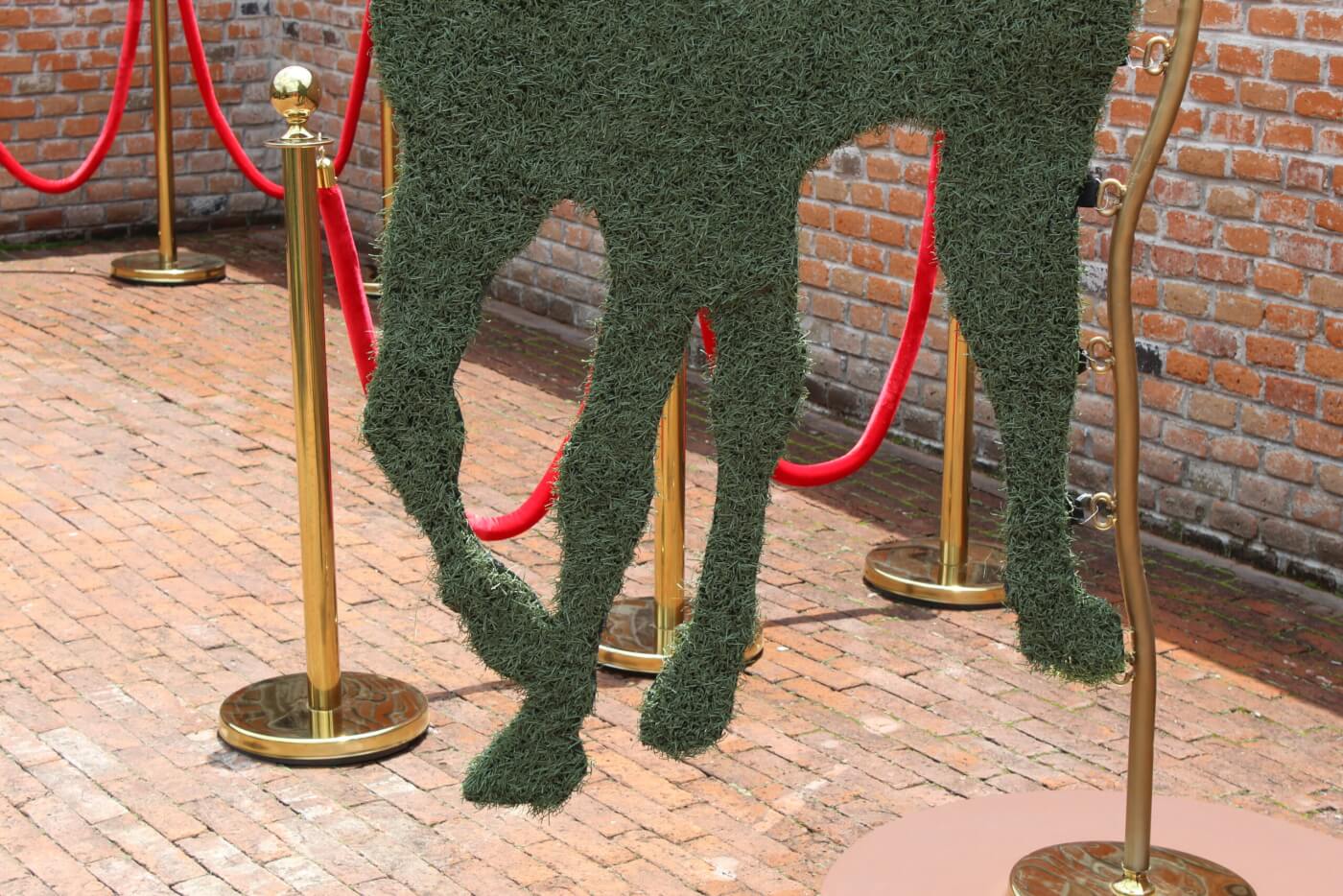
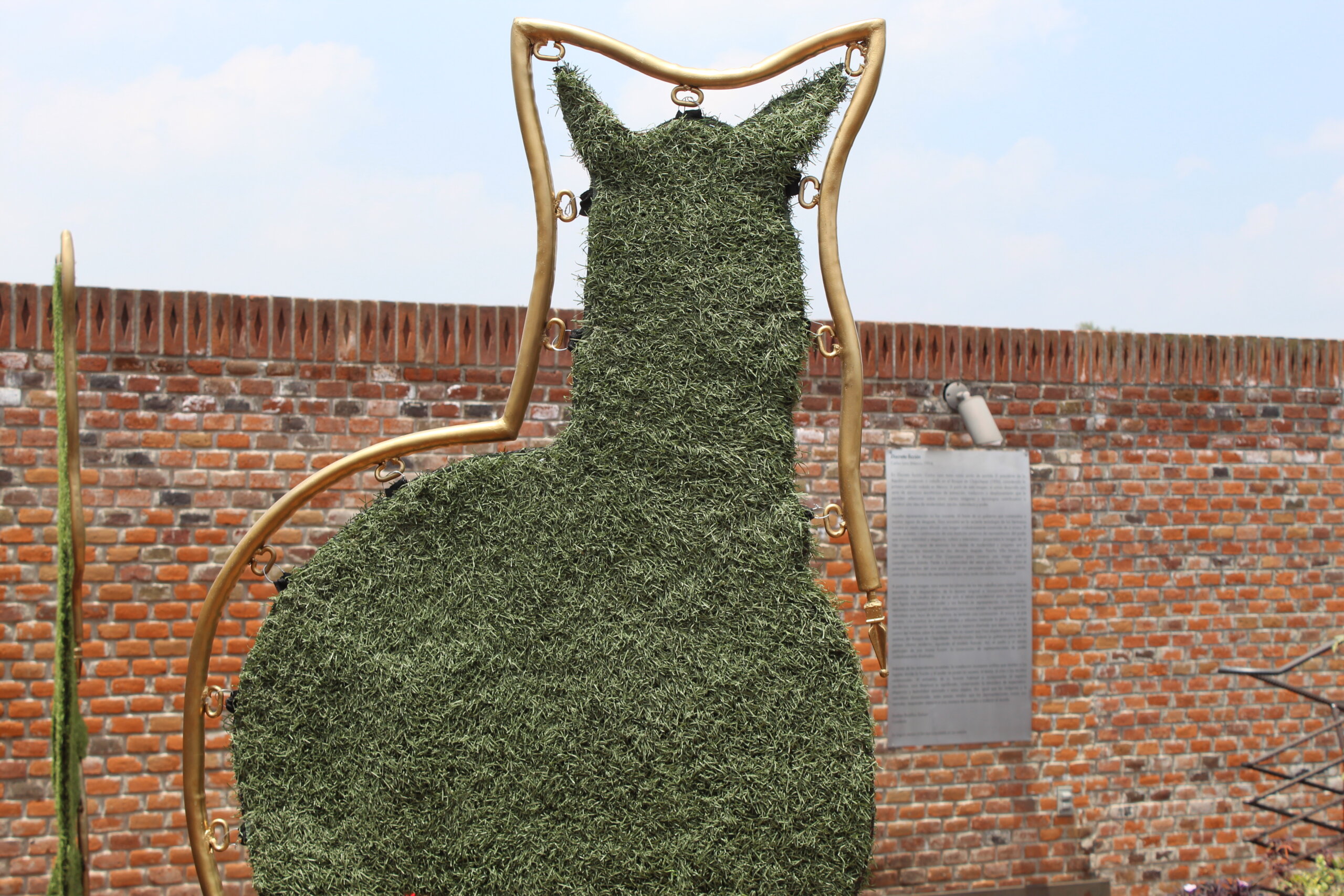
From this image, Lara extracts the silhouettes of the three horses to transform them into banners. By detaching them from the original scene and incorporating them into the sculptural space, the horses cease to be merely the presidential portrait and become an archetypal figure of power and its forms of representation. The banners, made of artificial grass, take on a new tension: the representation of a nature that, far from being organic, is also a construction. By evoking the art of topiary—the practice of shaping trees and shrubs through pruning—the piece highlights a conception of landscape as a designed space that exposes the idea of human control over nature. It is no coincidence that Díaz chose to portray himself in the gardens of Chapultepec Forest, which were transformed during his administration into a modern urban park, following the French model. Thus, the garden and the portrait are part of the same fiction: the construction of carefully designed representations of power.
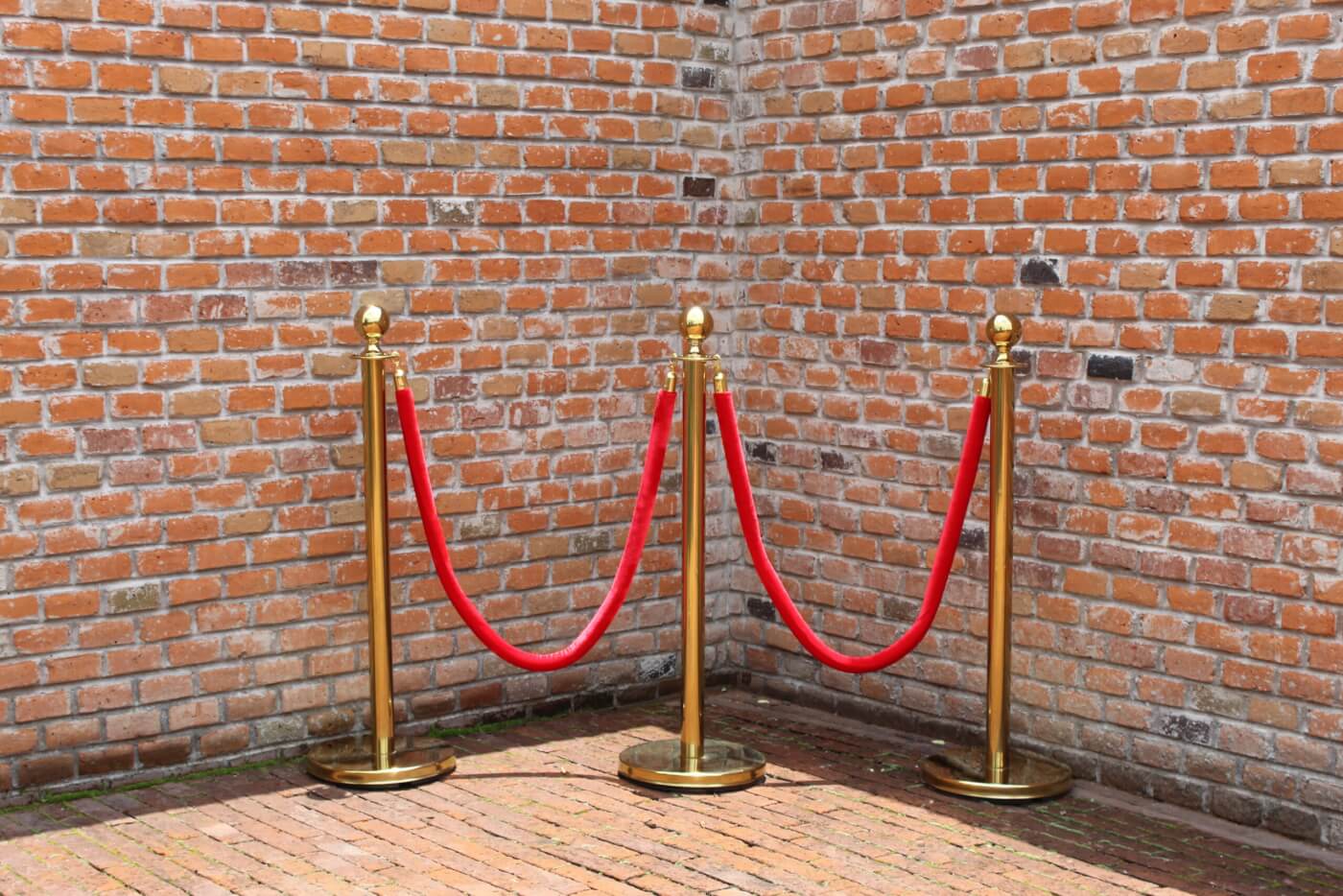
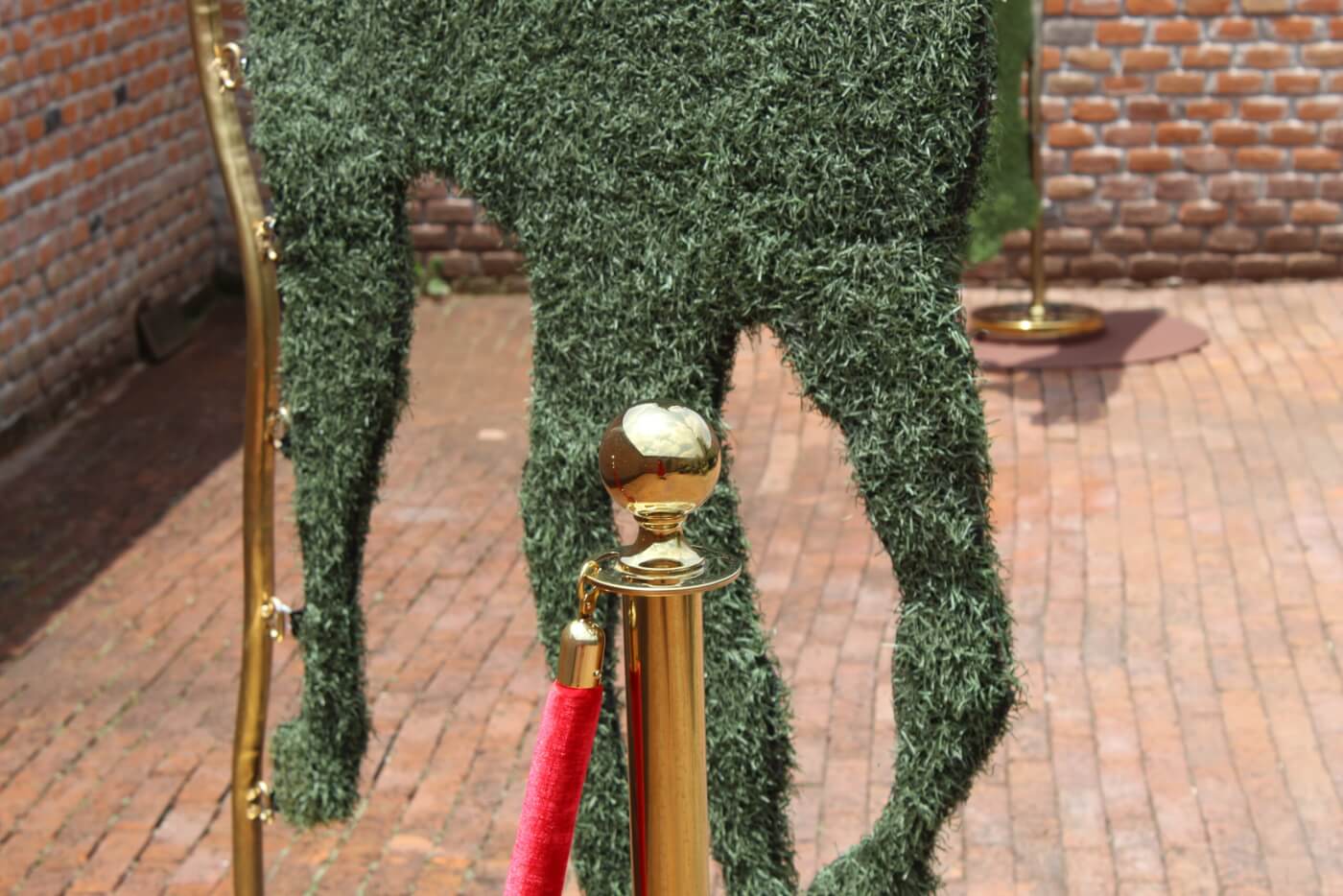
In addition to the equestrian banners, the installation incorporates single-file lines that evoke the places where fiction and power are staged: the theater, the cinema, or ceremonial venues. By removing them from their usual function and incorporating them into the sculptural space, Lara shifts their meaning while preserving the atmosphere of anticipation, elegance, and theatricality associated with these objects. Thus, just like images and domesticated nature, these pieces reveal that representations are never neutral: they always respond to a particular way of conceiving and ordering the world.
Andrea Bustillos Duhart
Curator