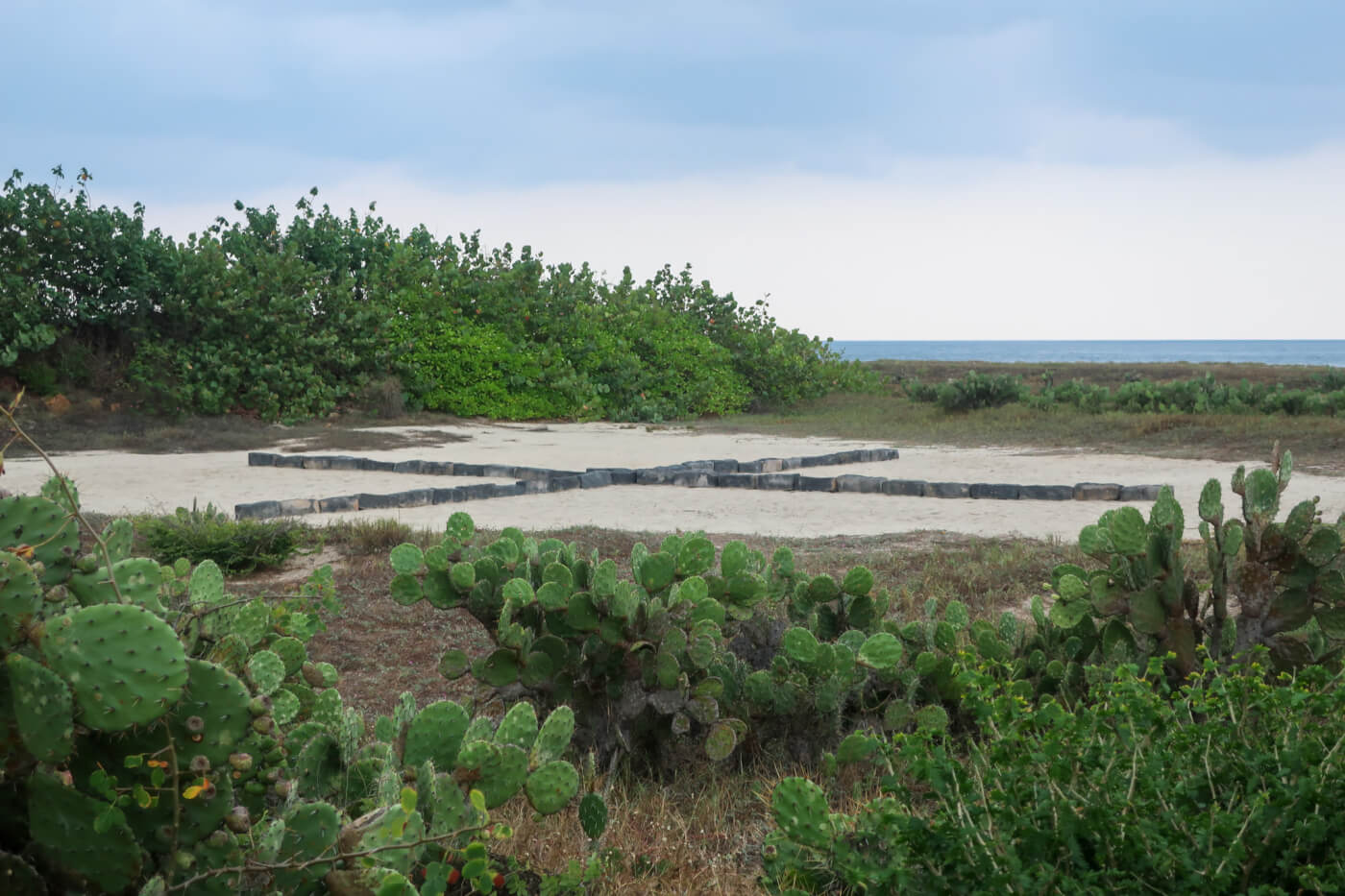
From Popocatépetl to the Pacific
Richard Long
January 31, 2026 – January 3, 2027
Since the late 1960s, Richard Long (England, 1945) has made walking a form of art, transforming a universal and everyday action into a powerful way of relating to the land and of turning human experience into an aesthetic form. His works, the result of a keen sensitivity to nature, establish a dialogue with the landscape through minimal gestures of great poetic resonance. These interventions—at once ephemeral and enduring—bring into focus the human dimension in relation to the vastness of geological time, inscribed in the stone and earth that constitute his works, as well as the conceptual force of the gesture.
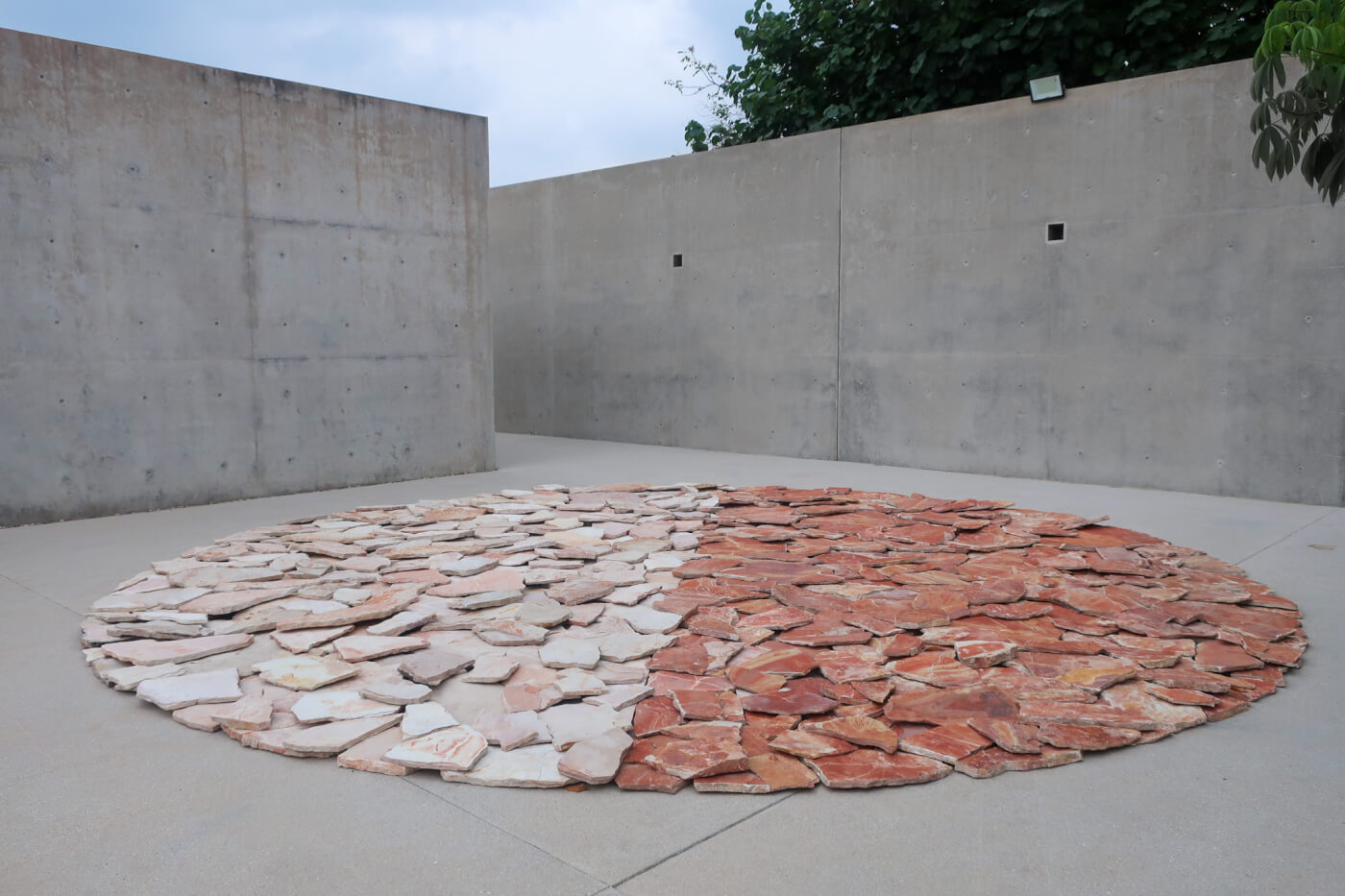
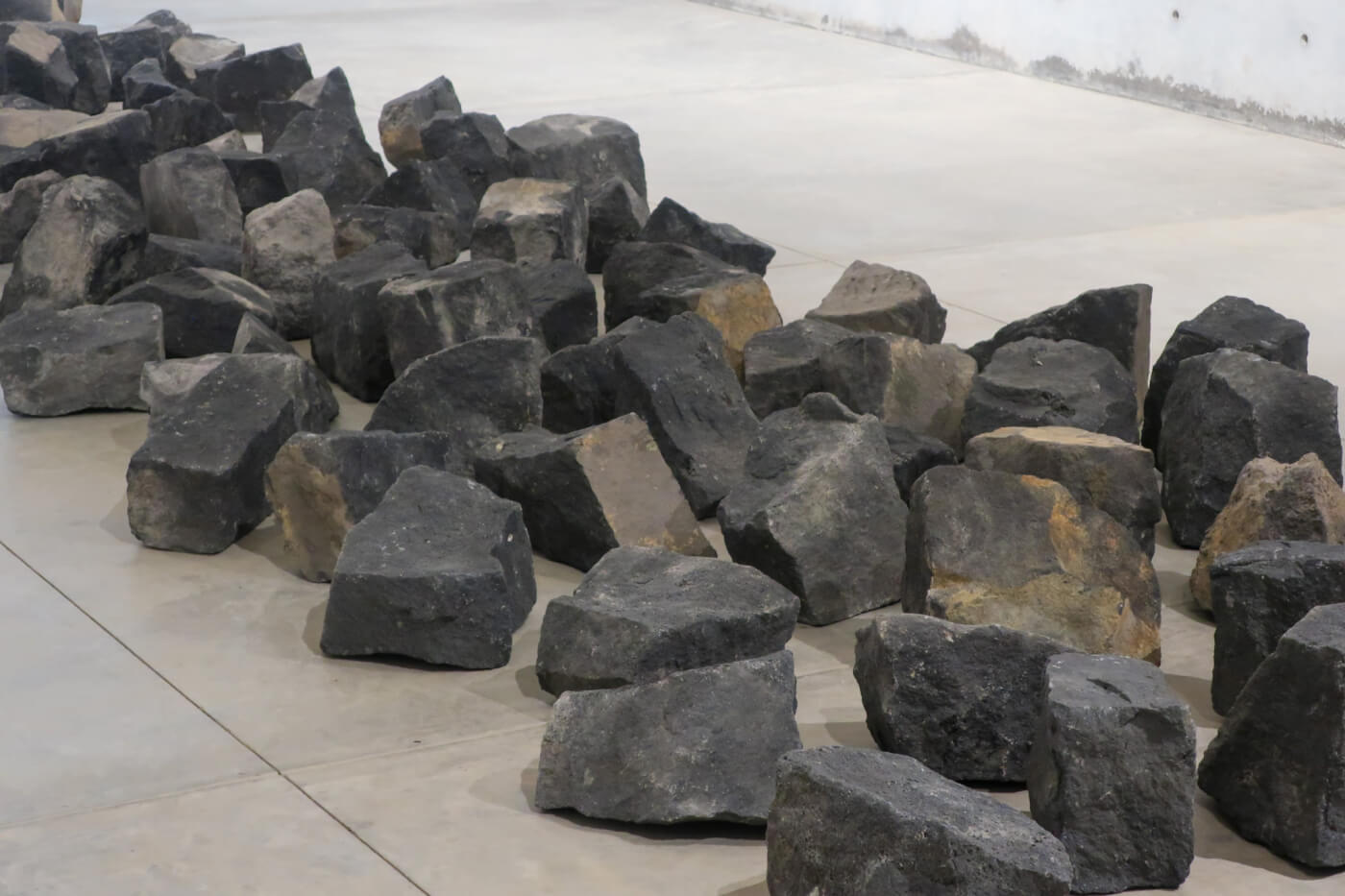
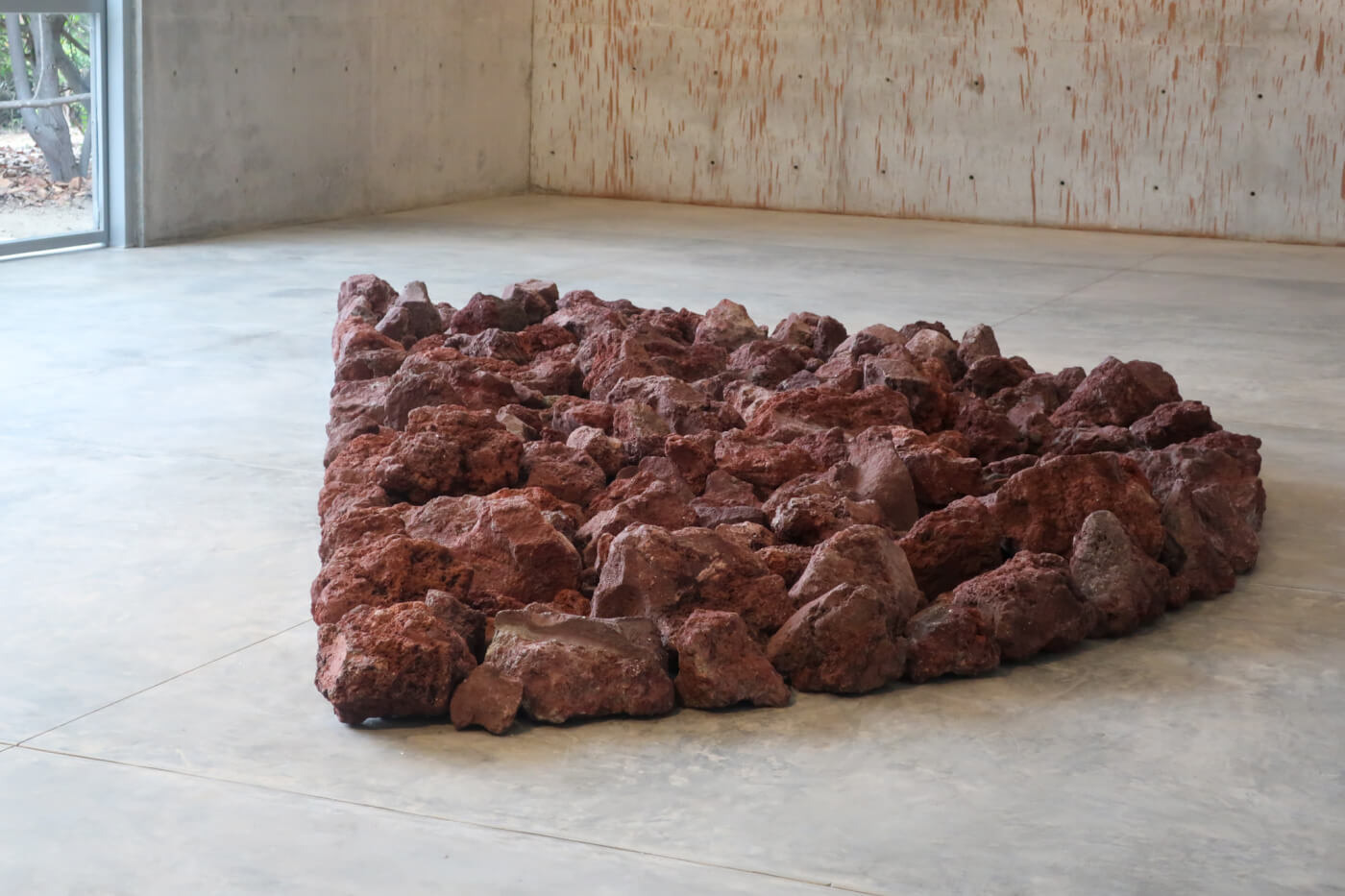
The works presented here reflect Long’s sustained interest in Mexican topography, a country he has traversed on numerous occasions since the 1970s. Volcanic stones from the central valleys of Mexico and slate slabs from Puebla are simply rearranged within the space of Casa Wabi, employing elementary geometric forms so that the human gesture and the formal qualities inherent to the materials become the central axis of the work. It is in the forms and qualities of the stones that the beauty and poetics of the pieces reside.
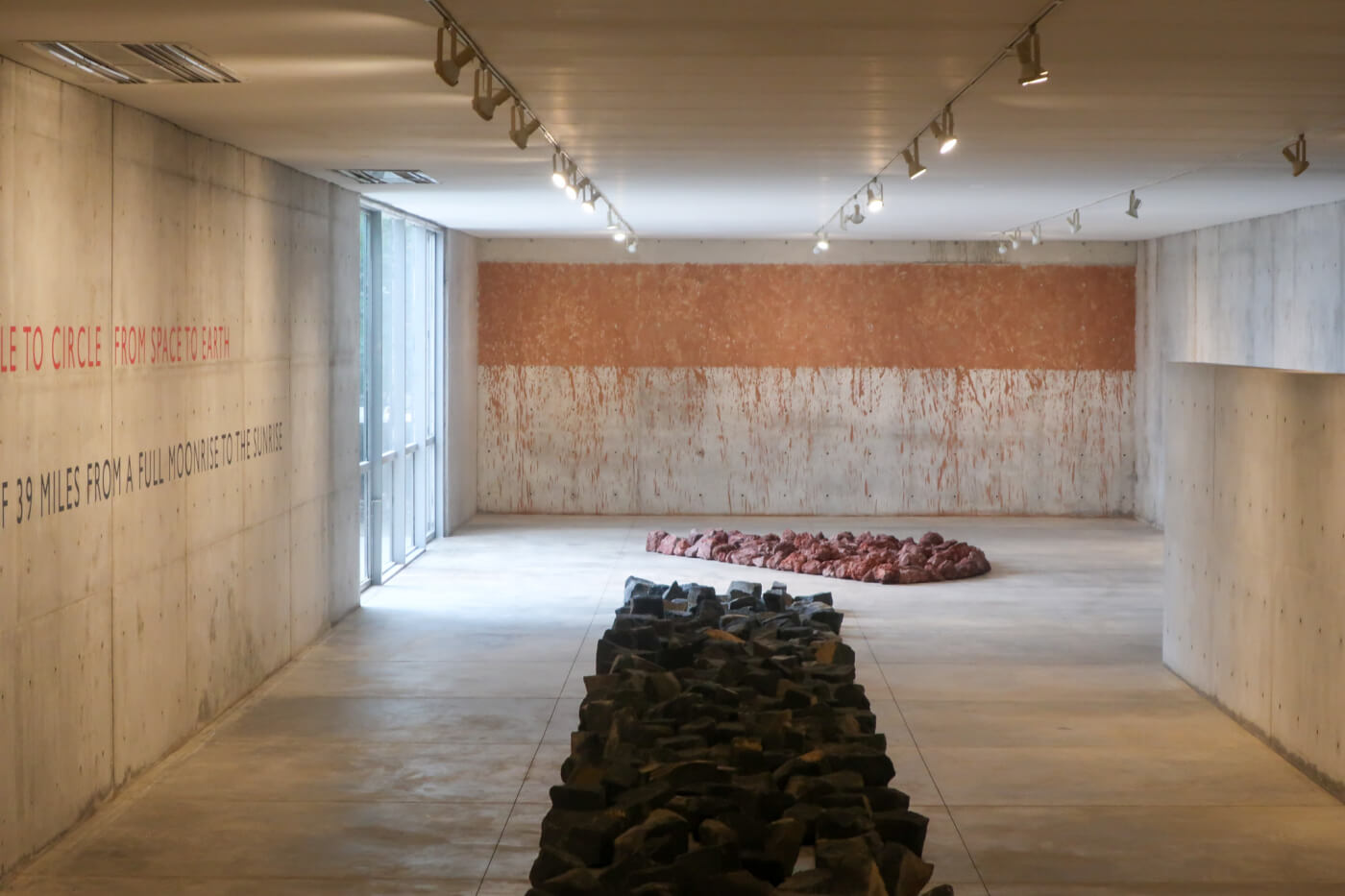
A similar approach can be seen in the wall work made with earth from the coast of Oaxaca, where the color and texture of the material are as significant as the perceptible movement of the artist’s hand. Long’s practice is sustained by a constant oscillation between discovery and intention: between the act of finding the stones and the experience of being found by them. This relationship guides the inception and realization of the works, which combine a careful attention to formal aspects—the presence and character of the stones, the color of the earth—with a conceptual practice in which gesture and human scale occupy a central place.
Through his works, Long reflects on his journeys and walks through deserts, coastlines, valleys, and rivers—routes that allow him, on the one hand, to measure his bodily dimension and on the other, to situate his presence on the earth. In this sense, the text work From Circle to Circle From Space to Earth (2002), produced after a continuous 39-mile walk, offers a poetic description of a night on Earth, while also providing a way to perceive human scale and our existence as part of something far more vast and immeasurable: space. This work, like many of Long’s textual pieces, once again emphasizes the poetics and the power of forms and their meanings. As Rebecca Solnit writes in Wanderlust: A History of Walking, “Language is like a path; it cannot be perceived all at once, because, whether heard or read, it unfolds over time.”[1]
Thus, Richard Long’s walks and works, developed within this dynamic between intention and discovery, are woven together to create a continuous experience that inhabits his body. The artist generously shares this way of being with viewers, allowing the experience, through suggestion and imagination, to also live within us.
Andrea Bustillos
[1] Solnit, Rebecca. Wanderlust: Una historia del caminar. Editorial Hueders, 2015. Pág. 406