La herida es un paisaje
Diego Chacón Orozco
October 3, 2026 – January 3, 2027
La herida es un paisaje is part of an investigation by Diego Chacón Orozco into the mythical origin of painting—a story recounted by Pliny the Elder and revisited by Pascal Quignard in La imagen que nos falta. In this tale, a woman traces the outline of her lover’s shadow—cast by the light of a lamp—onto a wall. For Chacón Orozco, the fire that illuminates the scene and enables the emergence of this first image becomes a starting point for exploring fire’s capacity to transform matter and generate new shapes.
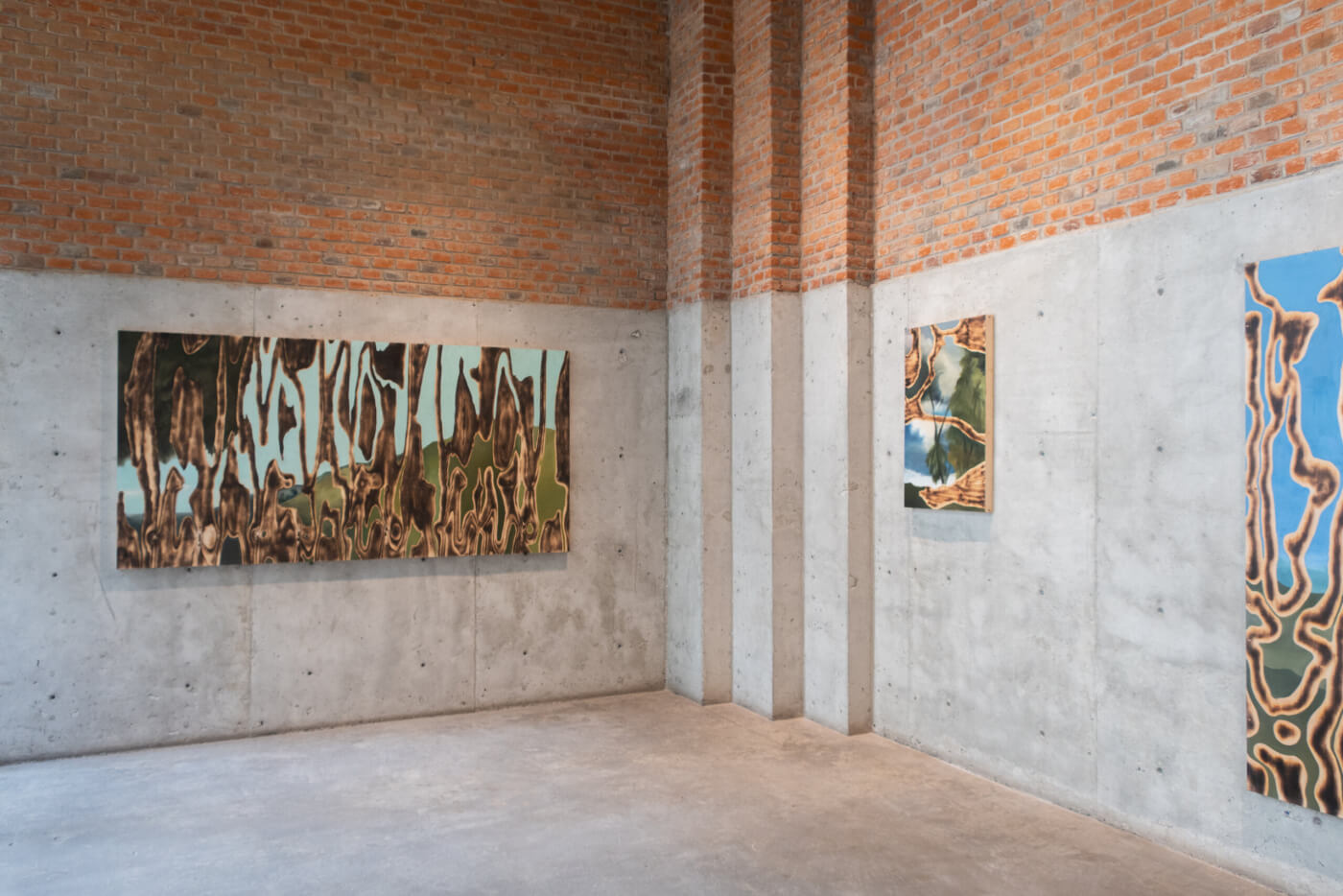
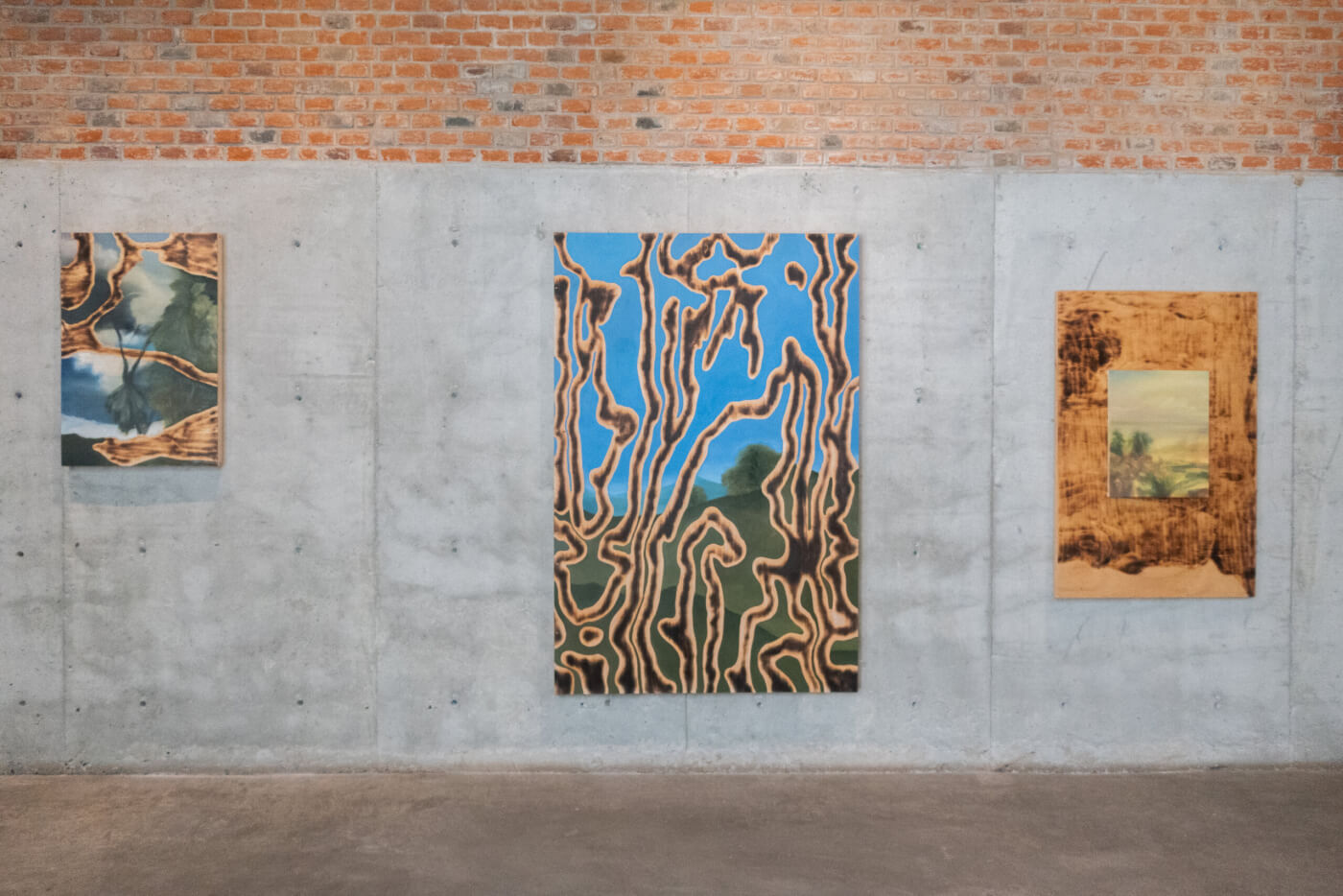
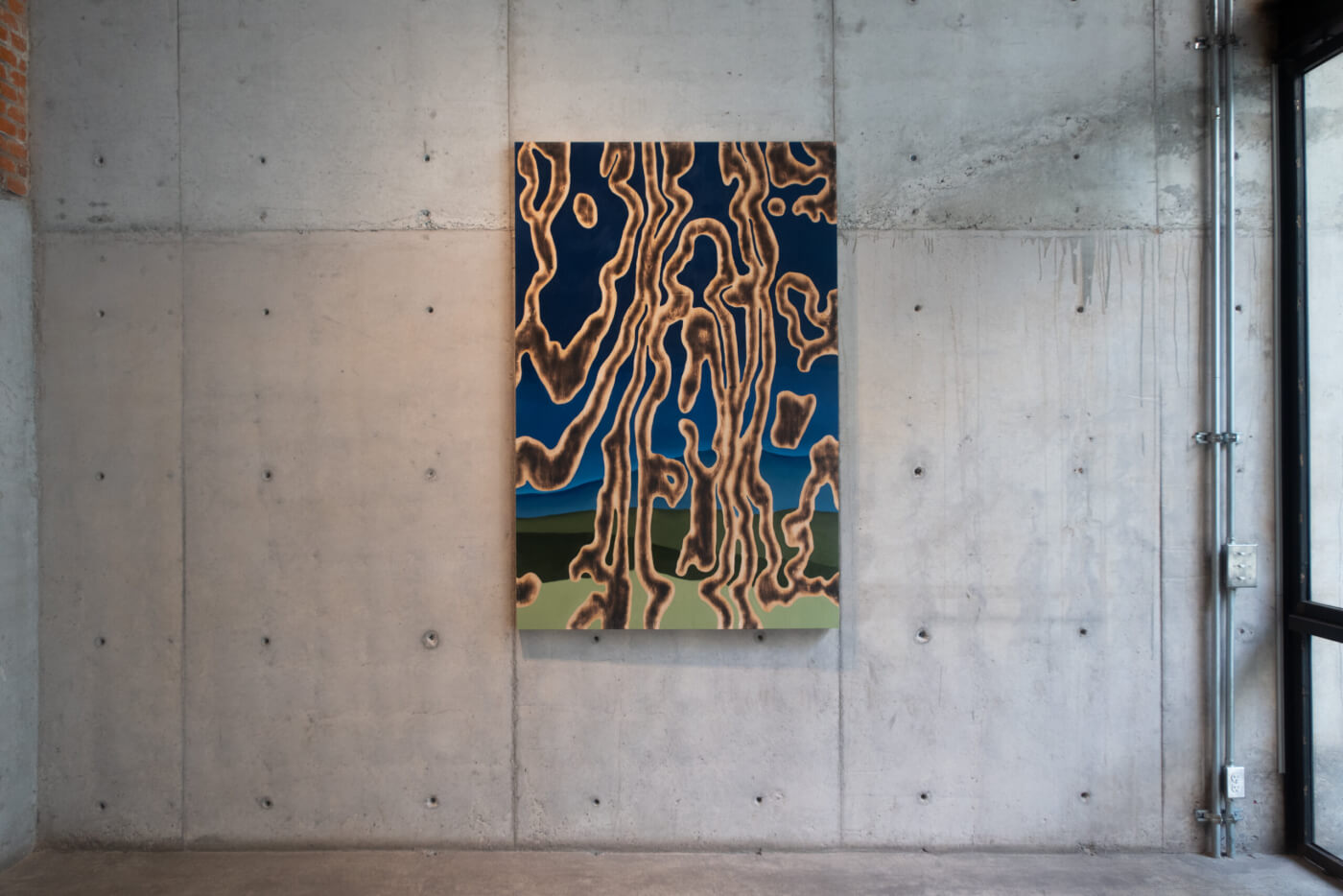
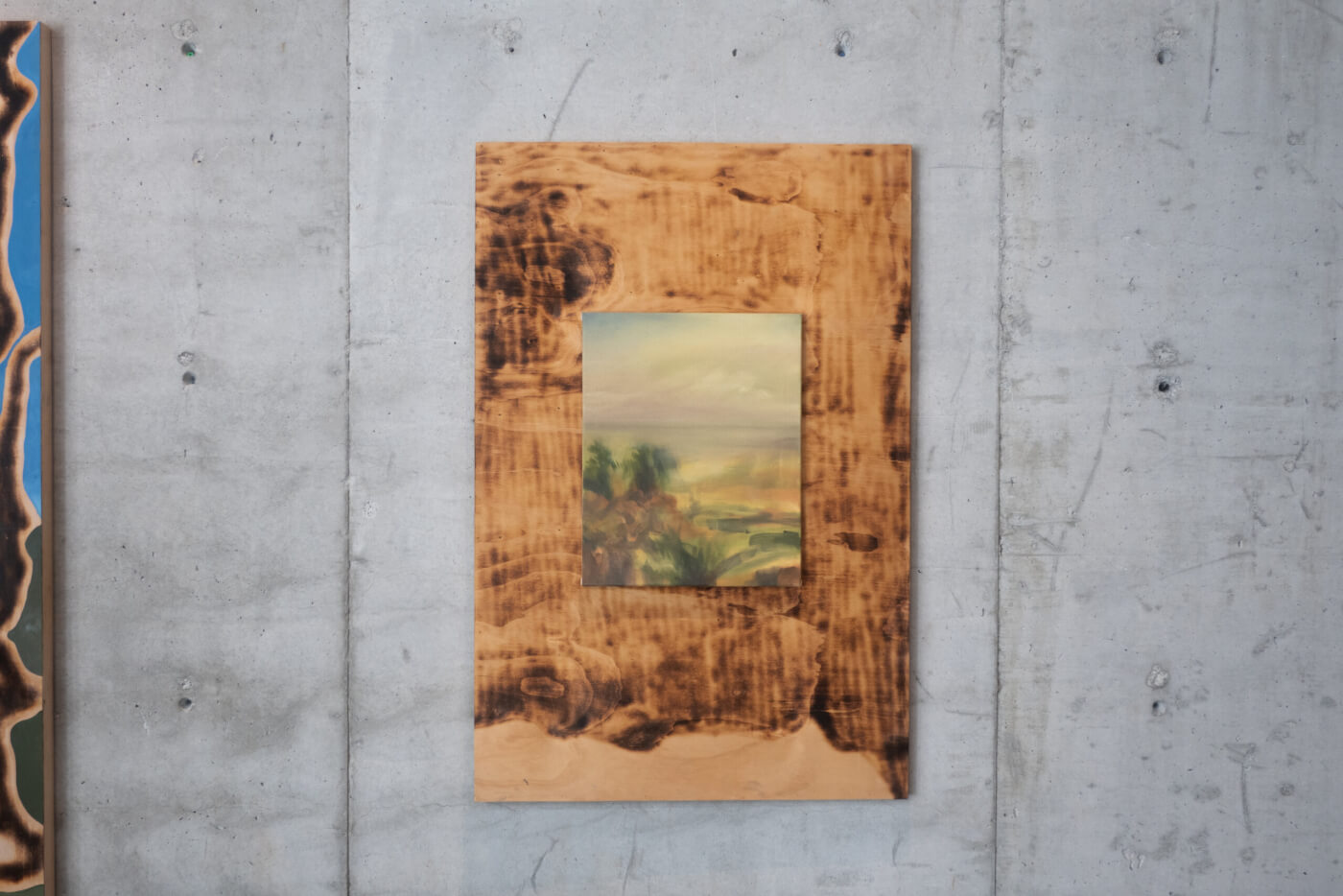
This inquiry intersects with a personal grieving process that began with the writing of letters to absent loved ones—letters subsequently burned as part of a ritual exercise. The act of writing and burning finds continuity in his painting: Chacón treats the wood surface with fire, revealing forms and textures dictated by the unique qualities of each piece of wood. Upon these surfaces, he paints landscapes that remain partially veiled by the combustion, thereby superimposing two visual orders: the cultural and the material. The former approaches landscape not as nature as such, but as a construct of the gaze—a way of selecting, framing, and organizing what we see. The latter responds to the inherent forms of the material itself, revealed through the action of fire.
In this convergence of painting, fire, and matter, the artist initiates a process with an outcome he cannot fully control: each piece of wood reacts differently to the combustion, making visible structures that had previously remained hidden. Thus, the wound ceases to be merely an interruption of the landscape and becomes, instead, the very thing that brings it into being.
Andrea Bustillos Duhart