Specular Crystallization
María Naidich
February 3, 2026 – April 19, 2026
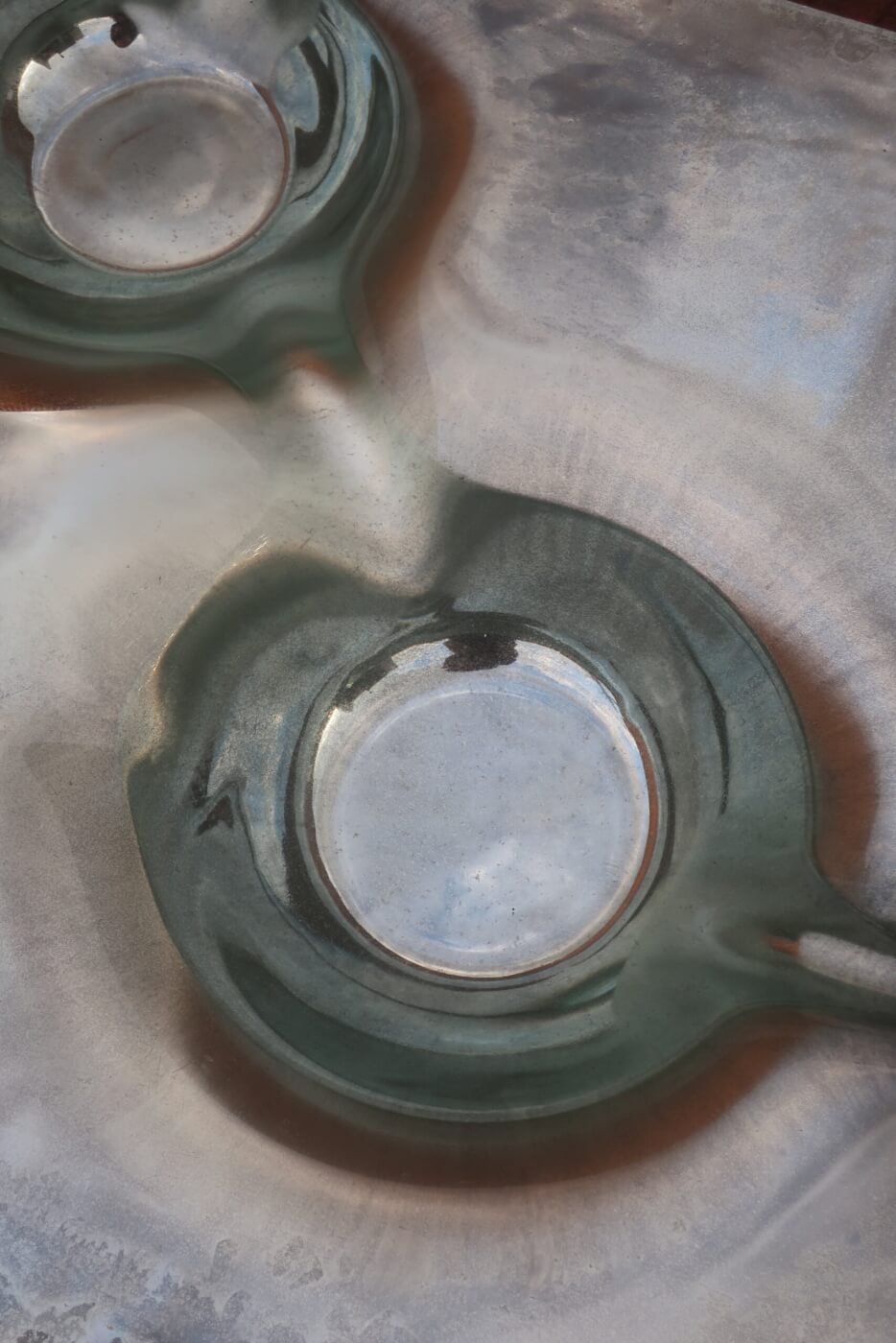
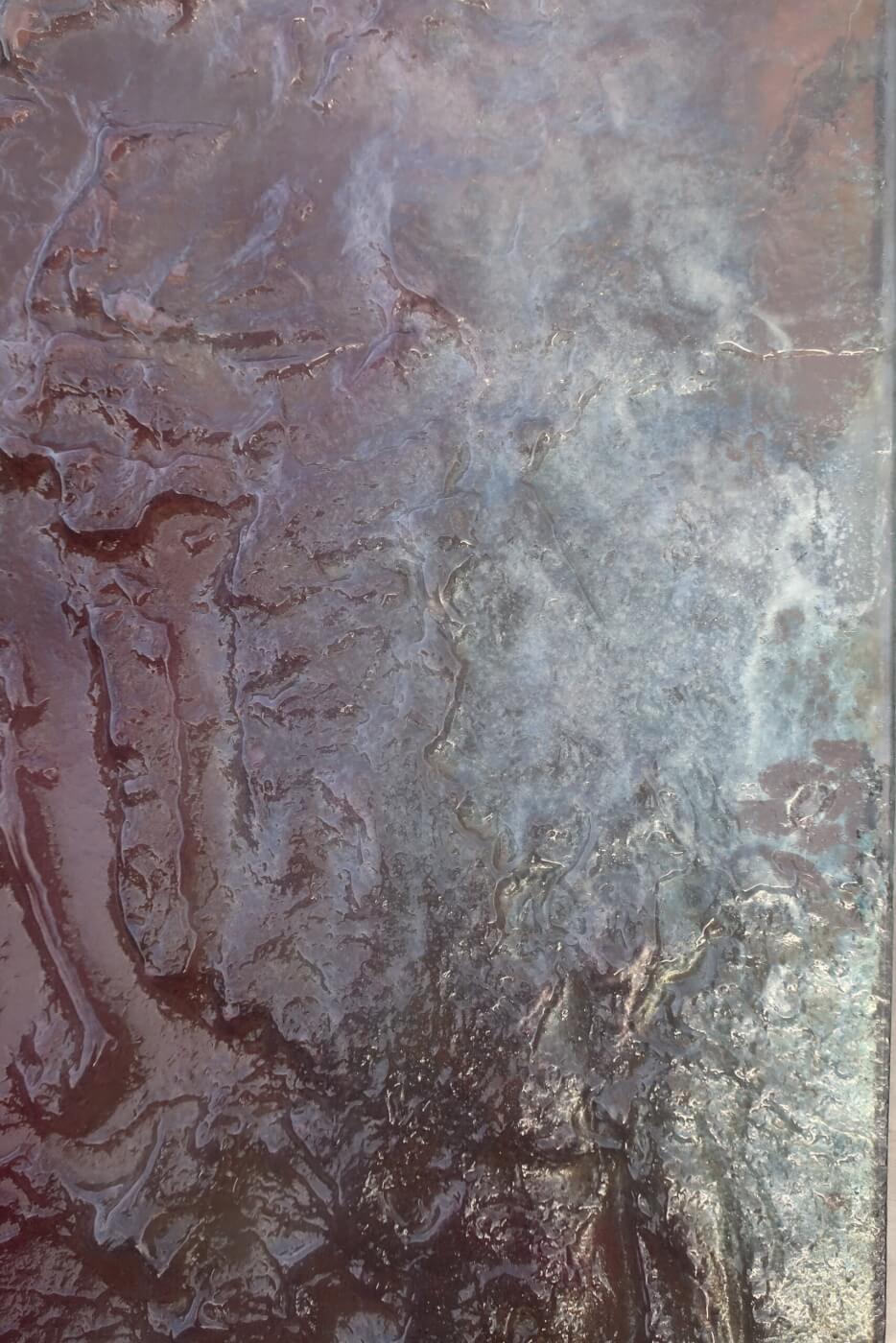
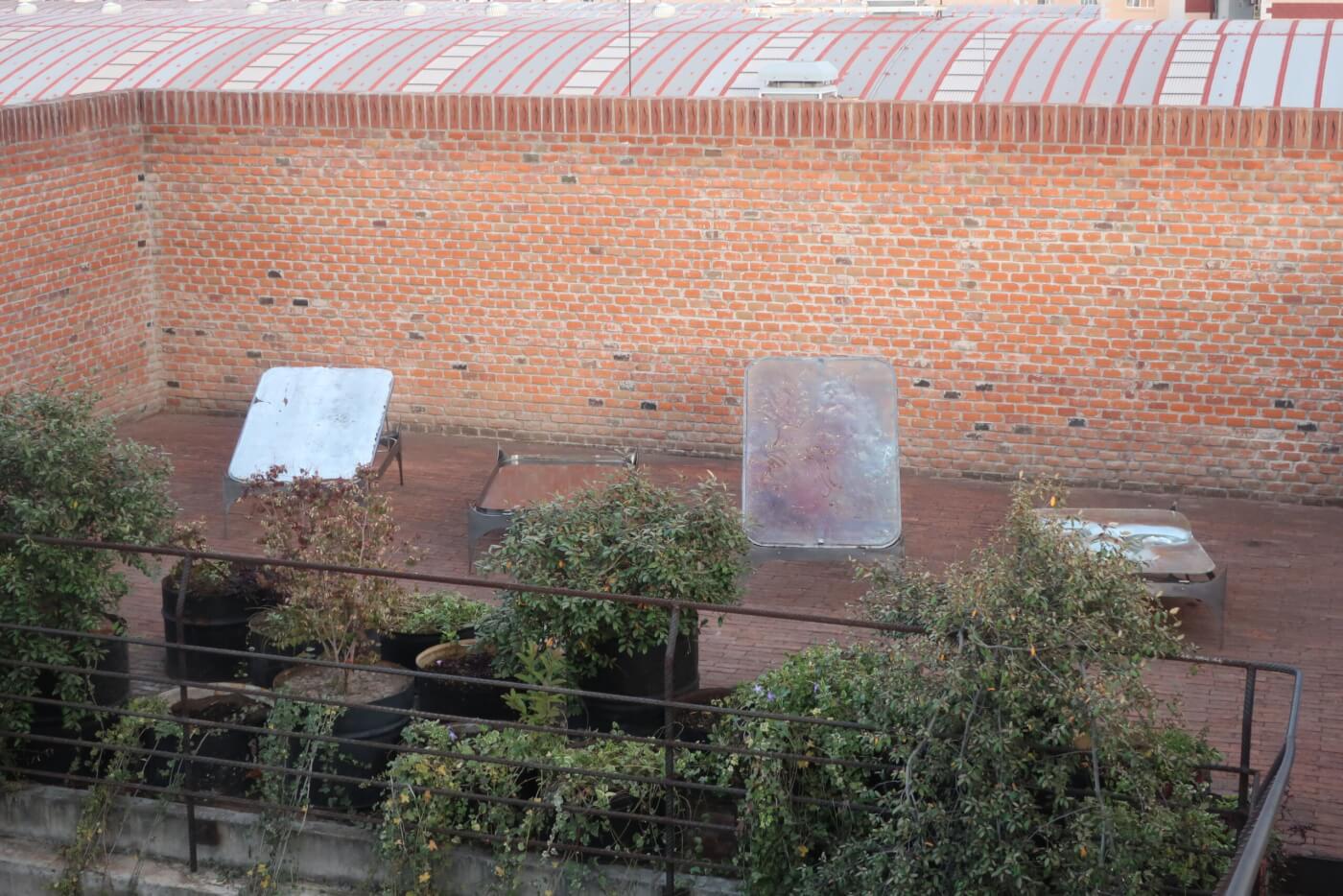
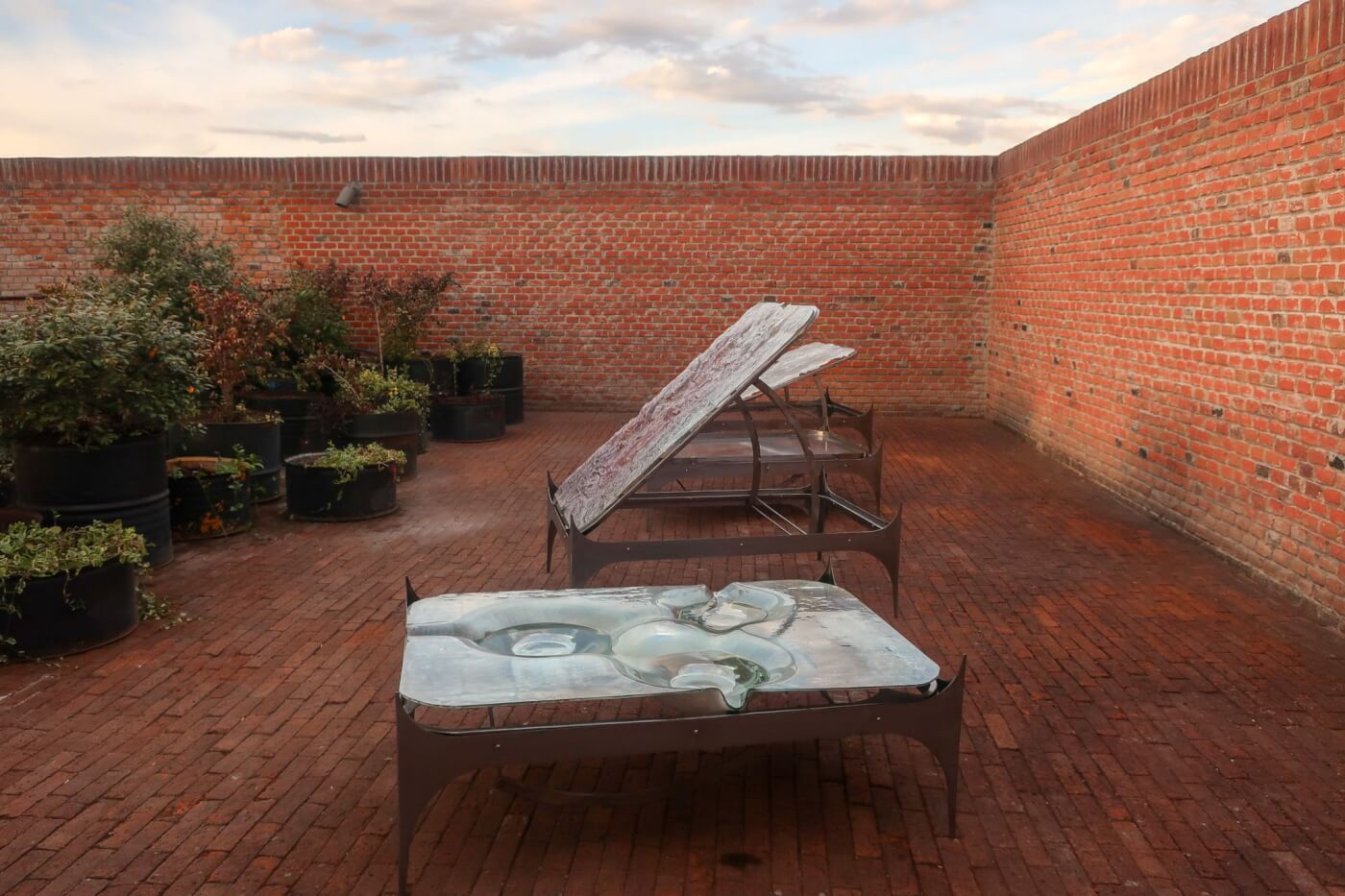
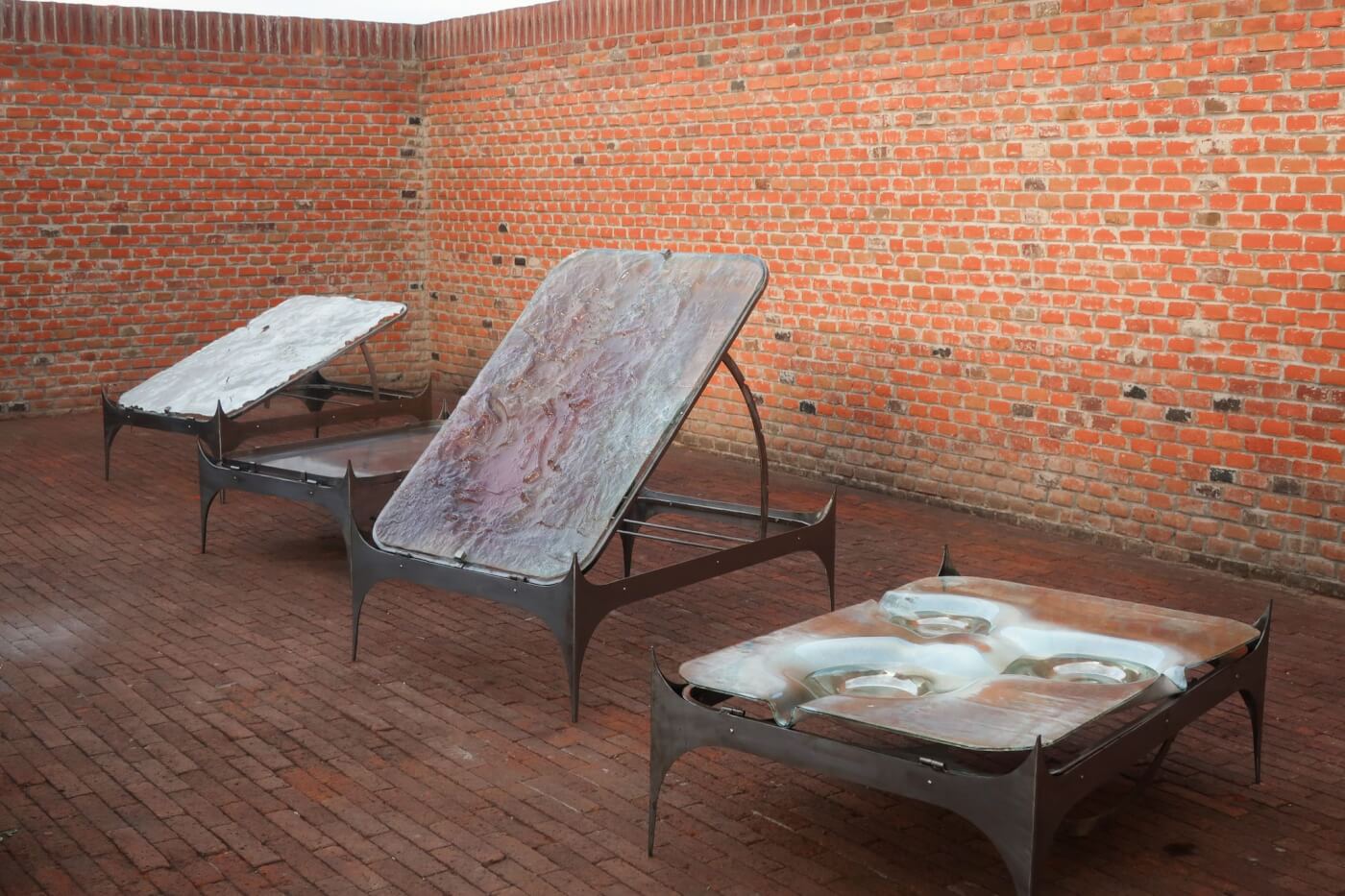
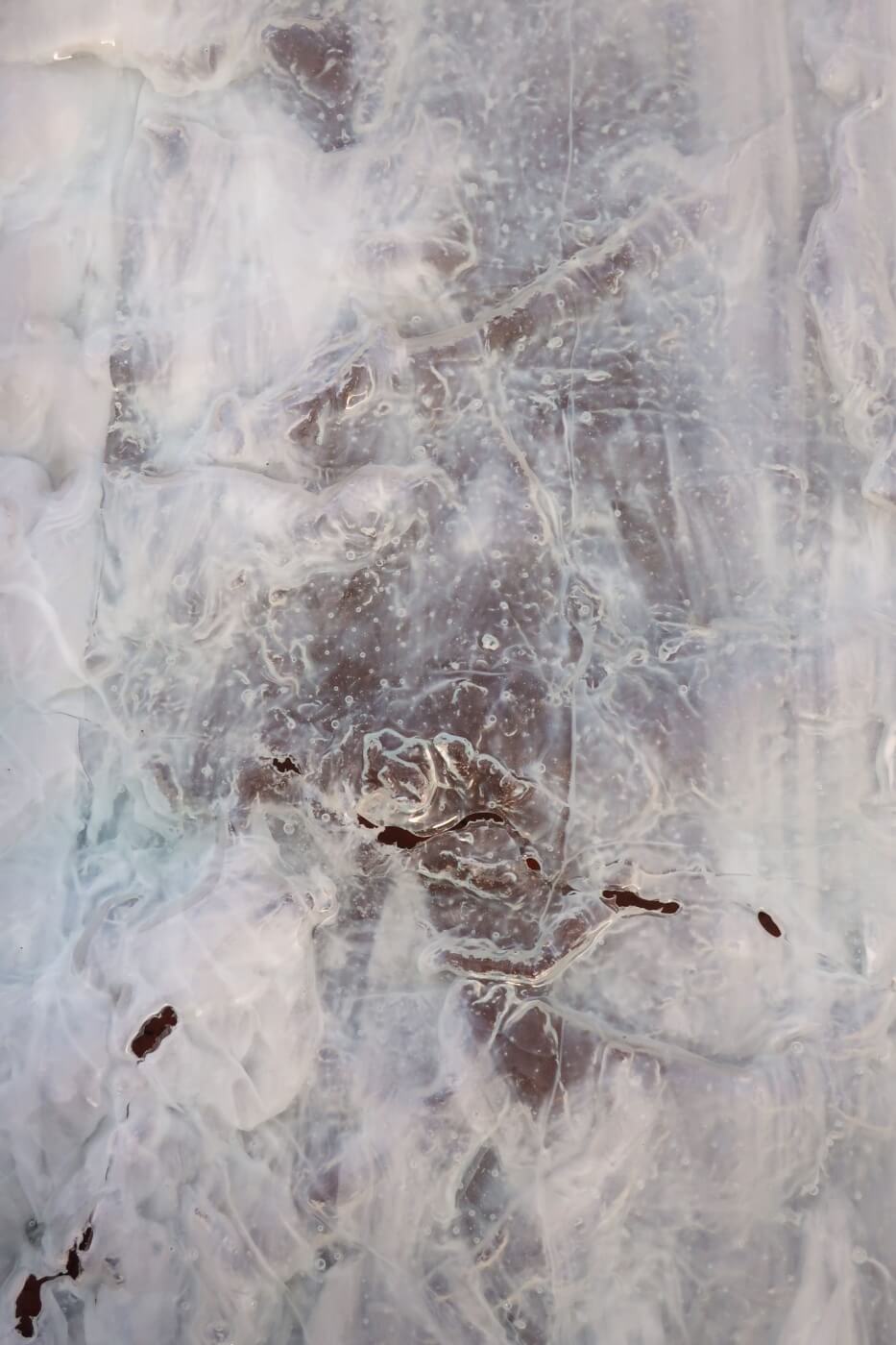
Four pieces welcome us on the terrace. Their strange appearance invites us to approach and pause in contemplation, wondering what this material of uncertain qualities might be: a kind of solidified liquid whose textures, colors, and reflections could evoke diverse or imaginary landscapes; or perhaps they simply call on us to surrender to the unknown and to appreciate their materiality beyond the search for understanding.
Naidich’s interest in the behavior of matter has led her to investigate its specific properties, as well as its interaction with other elements. Such is the case of glass, which, after the constant friction of sand with fire, transforms into a viscous, fluid mass that, upon cooling, apparently solidifies; although it appears stable to our eyes, it is in fact in continuous motion. The molecular structure of glass is closer to that of a liquid than to that of a solid, which is why it is in constant movement, as the artist explains in her book *Invocation of Stones*.
In this exhibition, which at first glance might seem like a simple display of formal experimentation, María contrasts notions of productivity and rationality—characteristic of the Anthropocene—with a more primitive, sensitive, and speculative approach to materials. The arrangement of the pieces, which evokes solar panels, functions as a playful device to reflect on the original function of these artifacts—as a technology that captures solar energy in order to store it and supply consumer needs—and becomes an aesthetic apparatus for observing matter. Through this gesture, the artist proposes redirecting our gaze toward a poetic dimension of matter, inviting us to reflect on the passage of time, as well as on the interaction and transformation of elements: water that evaporates in the sun, salts that crystallize, oxides that pigment, or silver that fades.
Each of the plates receives and reflects light. This is not the crisp, clean reflection to which we are accustomed, but rather an undulating, blurred, and mysterious one, which stands in opposition to the obsession with transparency and clarity characteristic of reason; a mystical mirror that allows for an imprecise and partial view of the reflection of the sky or of whoever approaches to look at themselves. In the same way, the sky is present through the traced reflection of Altair, a stellar body that was at the zenith of the sky on December 31, 2025. This star—larger, brighter, and much more distant than the Sun—forces us to relativize the human gaze from which we attempt to measure and understand the world, opening up the possibility of other scales, other times, and other forms of perception.
Andrea Bustillos Duhart
Curator